

How to Write a Reflective Essay in Nursing
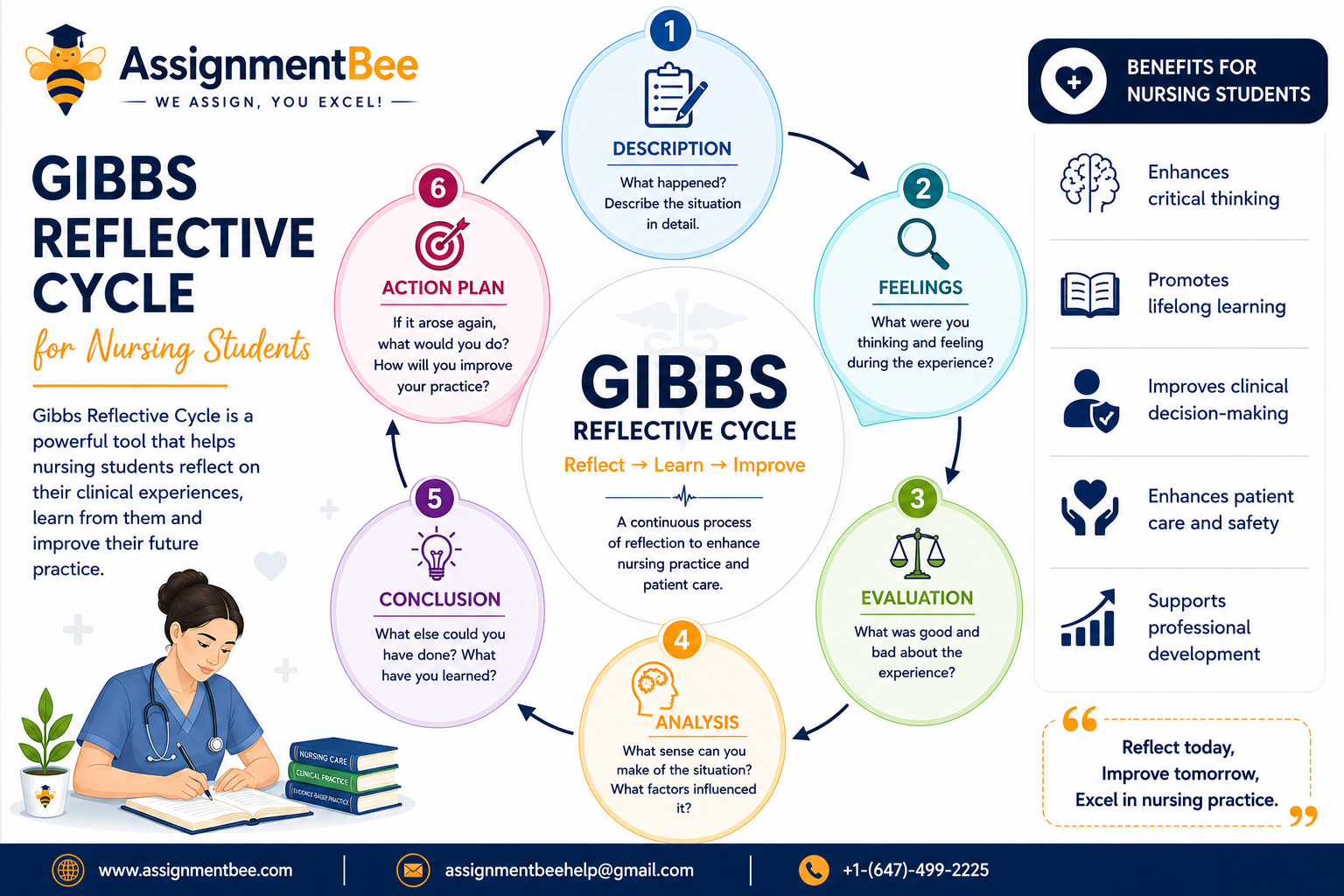
The Gibbs Reflective Cycle helps nursing students analyse clinical experiences, identify learning opportunities, and improve future professional practice.
What Is a Reflective Essay in Nursing?
In the field of nursing, a reflective essay is a structured academic composition that enables nursing students and professionals to critically analyse their clinical experiences and pinpoint ways for growth and improvement in both their personal and professional endeavours. Reflective practice is strongly believed to have a significant role in nursing education as it benefits self-awareness, critical thinking, and learning. Reflection allows a nurse to assess what they did and how, to think about how successful (or not) their choices were, and to plan ways for their practice to be better in the future. This way, students can more easily connect what they have learned in theory with what they see in practice, and it contributes to safe and effective care for patients (Bulman and Schutz, 2022).
Why Reflection Is Important in Nursing Practice
Choosing a meaningful experience in clinical practice that yielded a significant learning opportunity is the first step in writing a reflective essay. This might be a patient interaction, a difficult situation, a health care procedure, or a multi-disciplinary team. When a chosen experience has been selected, students should structure their reflection in a known framework. Known as Gibbs’ Reflective Cycle, the model has six stages that are used in nursing: description, feelings, evaluation, analysis, conclusion and action plan. A structured plan supports the essay to be more than just a narration and shows some critical analysis of the experience (Li et al., 2024).
Common Mistakes to Avoid while writing Reflective Essay in Nursing
Confidentiality and professionalism should be adhered to throughout the writing of the main body of the essay. To preserve the ethical and professional standards, any identifying patient information should be removed. The reflection should describe what happened and discuss the feelings that were felt during the event and critically assess the results. Students should use relevant nursing theories, academics and professional guidelines to support reflections. This evidence-based approach enhances the quality of reflection and shows that theory and evidence underpin nursing practice (Nursing and Midwifery Council, 2023).
A good reflective essay ends with a summary of learning and the implications for practice. Reflection helps nurses to identify strengths, identify weaknesses and improve their clinical skills over time. Reflective writing will continue to be a valuable resource for healthcare professionals in the future to foster their professional competence, accountability and lifelong growth. For this reason, reflective essays are a useful tool for training nursing professionals to provide high-quality, patient-centred care throughout their careers (Bulman and Schutz, 2022).
References
Bulman, C. and Schutz, S. (2022) Reflective Practice in Nursing. 7th edn. Oxford: Wiley-Blackwell.
Li, S., Wang, Y. and Zhang, H. (2024) ‘Reflective learning and professional development in nursing education: A systematic review’, Nurse Education Today, 134, pp. 1–9.
Nursing and Midwifery Council (2023) The Code: Professional Standards of Practice and Behaviour for Nurses, Midwives and Nursing Associates. London: NMC.
The post Reflective Essay in Nursing: Examples & Writing Guide (2026) appeared first on .